
Last reviewed: 17 October 2026.
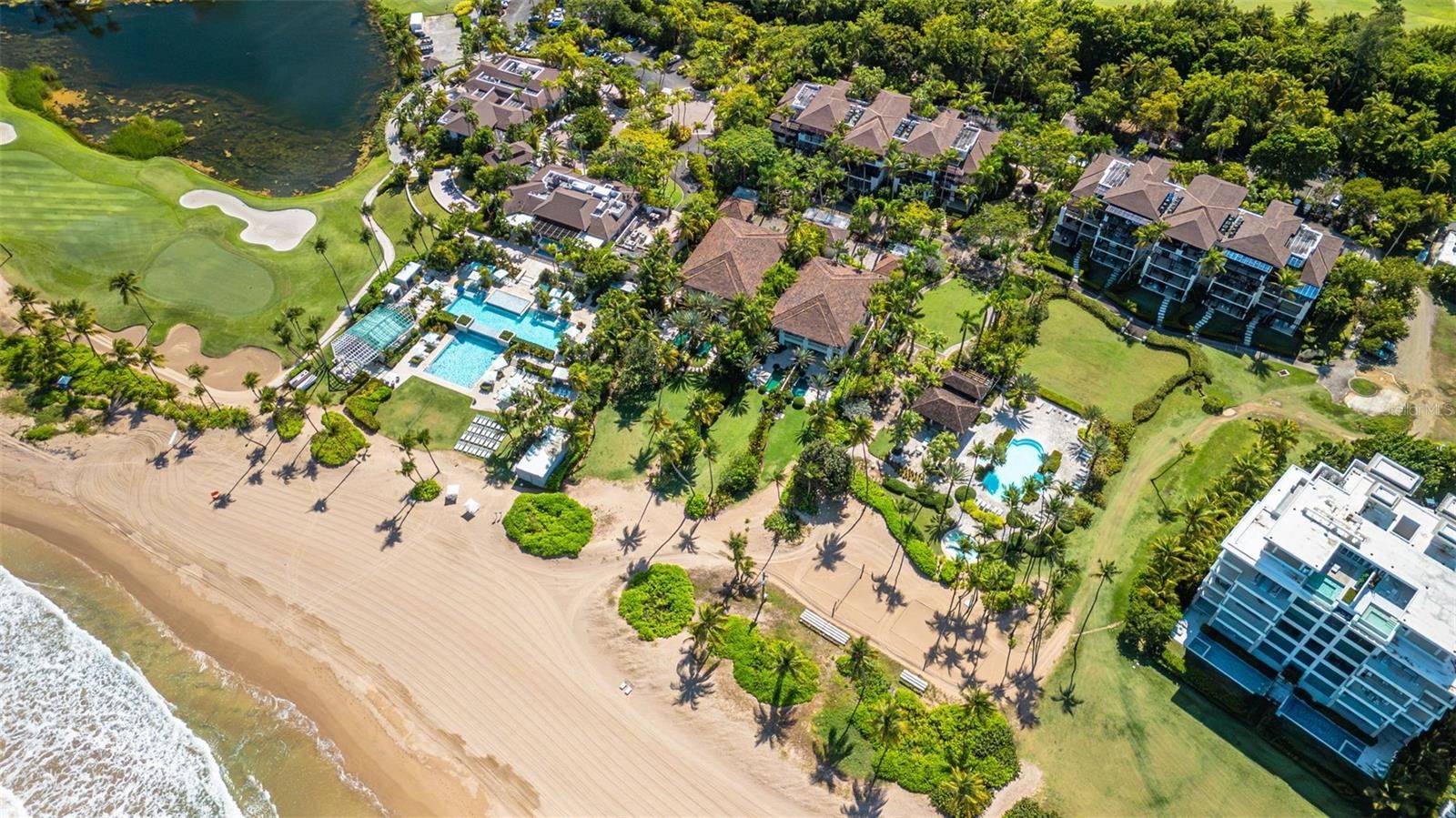
On 17 October 2026, TMZ reported that Tyler Perry had closed on a $30 million home in Puerto Rico, and that he is expected to move at the beginning of 2027. He has listed his Beverly Hills estate at $57 million and a Wyoming property at $39.5 million.
Two questions follow, and we get both of them every week from buyers on the mainland. Why Puerto Rico, and why now.
The answers are not the ones most people expect. The tax incentive is the headline, but it is the part that gets decided last. What decides whether the move works is a set of residency rules almost nobody reads until they are already here.
Why now: what changes on 1 January 2027
Act 60 applications filed on or before 31 December 2026 sit in the 0% bracket on interest, dividends and qualifying capital gains. Applications filed after that date move to 4%.
Existing decrees are grandfathered. That matters for how you read the deadline: the window is not closing. The 0% version of it is. A tax question has become a calendar question.
One correction we make often: buying a house does not lock in the rate. The application is what the date applies to. We have had buyers assume that closing before year end was the deadline that mattered. It is not.
Why there, answer one: you do not need a passport
Puerto Rico is a United States territory. For a U.S. citizen flying from the mainland, this is a domestic flight. No passport, no visa, no customs, no entry stamp.
There is one caveat that rarely gets mentioned, and it has tripped up travellers since 2025. Since 7 May 2025 the TSA requires a REAL ID-compliant licence at the checkpoint for domestic flights. If your state licence is not compliant, a U.S. passport, a passport card, a military ID or a DHS trusted traveller card such as Global Entry will also work. Check your licence before you book, not at the airport.
Why there, answer two: it is still the United States
U.S. dollars. FDIC-insured banks. Federal courts. The U.S. postal service. Your citizenship, unchanged. Your Social Security number, unchanged.
This is the part that separates Puerto Rico from every other jurisdiction offering a tax incentive. You are not emigrating. You are relocating, in the same sense that moving from New York to Florida is relocating — with a tax code that does not exist anywhere else under the U.S. flag.
Why there, answer three: the part that surprises people
The decree is not the finish line. It is the beginning of an annual obligation.
Under IRC §937 and Treas. Reg. §1.937-1, the IRS applies three separate residency tests, and a taxpayer has to pass all three, every year:
1. The presence test. The basic standard is 183 days of physical presence in Puerto Rico during the tax year. The regulation offers alternatives — one of them is 549 days across a three-year period with at least 60 days in Puerto Rico in each year, combined with limited presence in the United States.
2. The tax home test. Your tax home cannot be outside Puerto Rico during the year. This is determined under the principles of §911(d)(3), and it is where a great deal of the fact-specific analysis happens.
3. The closer connection test. You must have a closer connection to Puerto Rico than to the United States or any foreign country, measured under the framework used for the substantial presence test.
Fail one of the three and you lose the federal exclusion for that year.
The sentence that costs people money
The decree does not bind the IRS.
A decree is issued by Puerto Rico. The residency tests are federal. They are two separate systems, administered by two separate governments, and holding the first does not satisfy the second. A decree holder who fails the §937 tests in a given year loses the federal exclusion for that year regardless of what the decree says.
This is not theoretical. The IRS has been examining these claims actively, and in 2026 it rejected a taxpayer's claim of bona fide residency and asserted fraud, having determined that the taxpayer's tax home was in New Jersey or Florida rather than Puerto Rico.
Why a real estate broker is part of this conversation
Here is the connection that is rarely drawn. Two of the three tests are not about what you earn. They are about where your life physically is.
The tax home test asks where your principal place of business sits. The closer connection test looks at where your permanent home is, where your family lives, where your belongings are, where your social and political ties are, and where you hold a driver's licence.
Those are housing questions before they are tax questions. Where you buy, which community you buy in, whether your family will actually stay through the second year, whether the schools work, whether your commute is survivable on a Tuesday in traffic — those facts build the record that supports or undermines two of the three tests.
We have told buyers that Puerto Rico was wrong for them. A family that buys in the wrong community and leaves after fourteen months has not just made a lifestyle mistake. They have created a factual record that is difficult to defend.
Questions buyers ask us
What part of Puerto Rico is Tyler Perry moving to?
Not confirmed. TMZ described a gated community and a 14,475 square foot home built in 2021, and named no location. We will not speculate about which community. What we can say is where relocation buyers above $1,000,000 actually concentrate: Dorado, San Juan, Condado, Guaynabo and Río Grande.
Why are celebrities moving to Puerto Rico?
Act 60 is the headline reason, but it is not the whole answer. Puerto Rico is U.S. soil, so a move here does not mean emigrating, renouncing anything or losing access to U.S. banking and courts. The tax treatment simply does not exist anywhere else under the U.S. flag.
Do I need a passport to move to Puerto Rico?
No. Puerto Rico is a U.S. territory and travel from the mainland is domestic. You do need a REAL ID-compliant licence or an acceptable alternative such as a passport at the TSA checkpoint.
Does the Act 60 decree make me a Puerto Rico resident for the IRS?
No. The decree is issued by Puerto Rico. Bona fide residency is determined federally under IRC §937, through three tests you must pass every year.
What happens on 1 January 2027?
Applications filed after 31 December 2026 move from 0% to 4% on interest, dividends and qualifying capital gains. Existing decrees are grandfathered.
How many days do I have to spend in Puerto Rico?
The basic presence test is 183 days in the tax year. The regulation provides alternatives, including a 549-day test across three years with at least 60 days in each.
Can I keep my business on the mainland?
That is precisely where the tax home test applies, and it is the most common point of failure. It is a question for a Puerto Rico CPA, with your specific facts.
Which communities do relocating buyers choose?
Dorado, Condado, Guaynabo, San Juan and Río Grande account for most relocation purchases above $1,000,000. They are four or five very different answers to the same question, and the right one depends on how you actually spend your week.
Before you file anything
Three questions worth answering honestly, in this order:
Where will your family actually live, day to day, in year two? Can you be on the island 183 days without resenting it? And who is your Puerto Rico CPA?
Who wrote this. Antonio Cartagena (Broker, Lic. C-13471) and Lizvette Robles (Lic. 23765) run InvEstate Puerto Rico, a brokerage based in San Juan that works exclusively with relocation and Act 60 buyers, luxury resale and branded residences in Dorado, Condado, Guaynabo, San Juan, Río Grande and the west coast. We publish our own analysis of Stellar MLS closed sales and we are licensed in Puerto Rico.
We are real estate brokers, not tax advisors. We do not prepare decree applications and we do not give tax advice. For the decree itself we introduce you to a Puerto Rico CPA who does this work. Our side of the table is the third test: where you live, and whether that choice holds up — for the IRS, and for your family.
If you are weighing the move, call 787-717-6443.
Two of those five communities we have now written up in detail, with the closings behind them: Dorado Beach, where eighteen homes closed inside the gates this year at $748 to $3,110 a square foot, and Condado, where sixty-nine closed at a median of $850,000.
Purchase reported by TMZ on 17 October 2026 and not confirmed by public record at the time of writing. Residency requirements from IRC §937 and Treas. Reg. §1.937-1. REAL ID enforcement date from TSA. This article is general information, not tax or legal advice.