
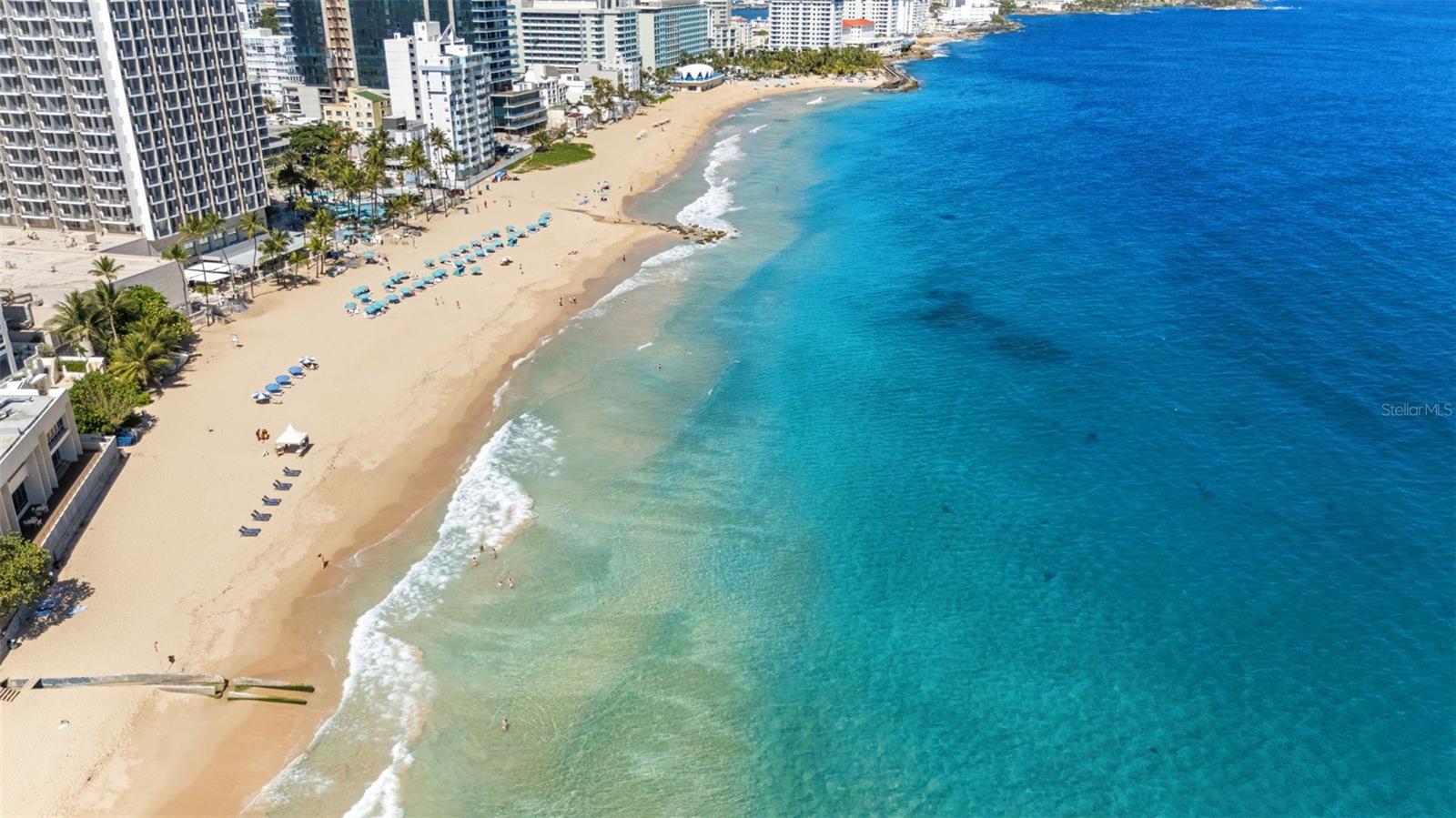
Moving to Puerto Rico often starts with a tax conversation, a lifestyle conversation or both. But eventually, every relocation buyer faces a more practical question: Where should I actually live? For buyers who want an urban lifestyle, Condado is frequently one of the first neighborhoods considered.
It combines condominium living, beaches, restaurants, healthcare, schools, professional services and everyday conveniences within a relatively compact section of San Juan. But Condado is not the right choice for every buyer. Someone seeking a gated resort community, substantial private land or golf may prefer another part of Puerto Rico.
Someone who wants to walk to dinner, live near the beach, reach the airport relatively quickly and remain connected to metropolitan San Juan may find Condado much more compelling. The goal of this guide is not to convince every relocation buyer to choose Condado. It is to help you determine whether Condado actually fits the way you plan to live.
Why Relocation Buyers Consider Condado
Condado provides a lifestyle that is relatively difficult to reproduce elsewhere in Puerto Rico. Within the neighborhood, residents can access restaurants, cafés, beaches, hotels, fitness facilities, medical services, schools and professional services without depending on a car for every activity. That is one reason Condado frequently appeals to buyers relocating from cities such as: New York, Miami, boston, chicago, and other dense metropolitan areas.
For someone accustomed to an urban routine, Condado can make the transition to Puerto Rico feel more familiar. It offers island living without requiring the buyer to give up the structure of city life.
Condado Is Urban Puerto Rico
This distinction is important. Condado should not be evaluated as a resort community. It is an urban coastal neighborhood. That means the advantages include: walkability, restaurants, activity, proximity to services, high-rise living, and easy access to the rest of metropolitan San Juan.
But urban living also means: traffic, pedestrian activity, restaurants and hotels, street noise, and less private outdoor land.
For one buyer, that energy is exactly what makes Condado attractive. For another, it may be the reason to choose Dorado, Bahía Beach or another residential market instead.
Walkability Is One of Condado’s Biggest Advantages
Walkability is frequently one of the strongest reasons relocation buyers choose Condado. Ashford Avenue functions as the neighborhood’s principal corridor, with residential towers, restaurants, hotels, retail and everyday services concentrated around it. A buyer can potentially walk from home to: coffee, dinner, the beach, the gym, medical appointments, and various everyday services.
That does not mean you will never need a car. Puerto Rico remains largely car-dependent outside concentrated urban districts. But Condado can significantly reduce how often a resident needs one for ordinary daily activities.
For a buyer moving from Manhattan, Miami Beach or another walkable urban environment, that difference can matter enormously.
Can You Live in Condado Without a Car?
Potentially, but it depends on your lifestyle. A resident who: works remotely, uses ride-share services and walks to restaurants and services.
and spends most of their daily life in Condado and nearby San Juan may use a car relatively little. A family commuting daily to schools or workplaces outside the neighborhood may feel very differently. Similarly, someone who regularly travels to Dorado, Río Grande, Guaynabo or other parts of Puerto Rico will probably want a vehicle.
The right question is therefore not: “Do I need a car in Condado?” It is: “Where will I actually need to go every week?”
Airport Access
For relocation buyers who travel frequently between Puerto Rico and the continental United States, airport access can influence where they live. Condado's central San Juan location provides relatively convenient access to Luis Muñoz Marín International Airport compared with many luxury residential markets outside the metropolitan area. Travel time varies substantially depending on traffic and exact location, so buyers should not treat any fixed number of minutes as guaranteed.
But for executives, entrepreneurs, consultants and other frequent travelers, living in metropolitan San Juan can be a meaningful logistical advantage. This is especially relevant when comparing Condado with communities farther from the airport.
Healthcare Access
Healthcare is often underestimated during the early stages of relocation. It becomes much more important once a buyer begins imagining everyday life. One of Condado's advantages is that Ashford Presbyterian Community Hospital is located within the neighborhood, providing emergency, surgical and other hospital services. Additional medical facilities are accessible throughout metropolitan San Juan.
For: families with children, buyers with aging parents, full-time residents, or anyone expecting frequent medical appointments and proximity to healthcare can be a significant lifestyle consideration.
It may not determine which condominium you purchase. But it can influence which neighborhood makes sense.
Schools and Families
Condado is not only a market for retirees, investors or second-home buyers. Families also consider the neighborhood because several private and bilingual schools are located in or near metropolitan San Juan. Schools commonly evaluated by families in the Condado area include St. John’s School, Robinson School and Colegio Perpetuo Socorro.
But school selection should happen before purchasing a residence whenever education is a major factor. A family should consider: school acceptance, daily commute, traffic patterns, extracurricular activities, and where parents work.
A condominium may look only a few miles from a school on a map. That does not necessarily tell you what the morning commute will feel like.
Condado for Professionals and Business Owners
Condado can be particularly practical for buyers whose professional lives remain connected to San Juan. The neighborhood provides access to the metro area's: financial district, professional services, law firms, accounting firms, banks, hospitals, restaurants, and business infrastructure.
For someone who needs frequent in-person meetings, Condado may therefore fit differently from a resort market farther from San Juan. That distinction can matter significantly for relocation buyers. Lifestyle should support the business structure, not work against it.
Condado and Act 60 Relocation
Condado is frequently considered by buyers relocating to Puerto Rico under Act 60. But there is an important distinction: Act 60 is not a reason to buy a particular condominium. The tax strategy and the real estate decision should be evaluated separately and then coordinated.
For Individual Resident Investor decree holders, Puerto Rico's current framework includes a requirement to acquire Puerto Rico real property for use as a primary residence within the applicable period under the decree. The exact legal and tax requirements should be reviewed with qualified Puerto Rico tax and legal counsel. A buyer should therefore avoid approaching Condado with the mentality: “I need an Act 60 property.”
There is no special category of condominium called an Act 60 property. Instead, ask: “Does this residence actually work as my Puerto Rico home?” That is a much stronger question.
Your Home Has to Work Beyond the Tax Strategy
A relocation can look perfect on paper and still fail in practice if the buyer chooses the wrong lifestyle. Imagine someone who loves: golf, privacy, large outdoor spaces, gated-community living, and a quieter residential environment.
Condado may not be their best fit. Now consider someone who wants: restaurants downstairs, the beach nearby, short access to San Juan business activity, a condominium rather than a house, and minimal property maintenance.
For that buyer, Condado may make substantially more sense. The right relocation market is the one that supports how the buyer will actually live year after year.
Frequently Asked Questions
What Type of Property Will You Find in Condado?
Condado is primarily a condominium market. But even within that category, the inventory varies significantly. Buyers can encounter: older established condominiums, renovated oceanfront residences, lagoon-facing properties, large full-floor apartments, penthouses, boutique buildings, and new luxury developments.
That means saying: “I want a condo in Condado” does not narrow the search nearly enough. The real search begins when the buyer defines: size, view, building quality, parking, amenities, condition, monthly ownership cost, and budget.
What Does the Condado Market Look Like in 2026?
Our analysis of the 2026 Condado MLS market snapshot identified: 60 closed transactions; $73.9 million in closed sales volume; $925,000 median closed price; approximately $630/SF median sold price; 43% of transactions at $1 million or more; and 67% cash purchases.
Those figures show that Condado is not simply a multimillion-dollar luxury market. There is a broader resale market underneath the high-profile new developments. But the data also reveals increasing segmentation.
A renovated oceanfront residence, a $900,000 traditional resale condominium and a multimillion-dollar new-development unit should not automatically be compared as though they are the same product.
New Construction or Resale?
This is one of the biggest decisions relocation buyers now face in Condado. New developments such as: Vanderbilt Residences and The ICON are creating a new category of inventory. New construction can provide: modern building systems, contemporary floor plans, new finishes, amenities, and less immediate renovation work.
Established resale may provide: stronger closed-sale history, existing building operations, potentially larger square footage, irreplaceable oceanfront locations, and opportunities to renovate.
Neither is automatically superior.
Vanderbilt Residences
For buyers seeking a highly amenitized, directly oceanfront new-development experience, Vanderbilt Residences represents one of Condado's most visible options. The development combines direct oceanfront positioning with a substantial amenity program and hospitality-oriented services. It therefore competes in a different segment from much of Condado's traditional condominium inventory.
A relocating buyer considering Vanderbilt should evaluate not only purchase price but also: services, ownership costs, amenity usage, residence size, and how frequently the property will be occupied.
The ICON
The ICON provides another new-construction alternative. Located at 1120 Ashford Avenue, approximately one block from Condado Beach, it offers a more boutique residential concept. For buyers who want: new construction, without necessarily prioritizing a large resort-style amenity environment and The ICON may deserve consideration.
But its asking prices should still be evaluated separately from Condado's neighborhood-wide resale medians. New construction is a distinct product category.
Oceanfront or Lagoon-Side?
Condado's geography creates another important choice for buyers. Would you rather face: the Atlantic Ocean or Condado Lagoon? Neither answer is automatically correct.
Direct oceanfront residences may offer exceptional horizon views and beach positioning. Lagoon-facing properties can provide water, skyline and sunset perspectives that some buyers strongly prefer. Floor level, orientation and building quality can matter as much as the body of water itself.
A relocating buyer should experience both before deciding.
Visit the Property at Different Times
This is particularly important for buyers unfamiliar with Condado. A showing at 11:00 a.m. tells you how the property feels at 11:00 a.m. It may not tell you how it feels: during evening traffic, on a weekend, during restaurant hours, or when nearby hotels and streets are active.
If possible, experience the immediate area at more than one time of day. Walk the route to: coffee, the beach, restaurants, parking, and the places you expect to use regularly.
Relocation is not just a property decision. It is a routine decision.
What Does It Cost to Own a Condo in Condado?
Relocation buyers should distinguish between: what they can afford to buy and what they want to own every month. Condominium ownership can involve: HOA fees, master insurance, individual insurance, CRIM property taxes, utilities, special assessments, parking expenses, and maintenance.
These costs vary significantly by building. A highly amenitized luxury condominium may have a completely different operating structure from an older building with limited services. Do not choose a property solely because the acquisition price fits the budget.
Understand the ongoing ownership structure too.
HOA and Building Financials Matter
A relocation buyer may be tempted to focus on: view, kitchen, furniture, and amenities.
Those are important. But the condominium itself deserves equal attention. Before purchasing an established residence, buyers should review available information regarding: HOA, reserves, insurance, special assessments, building maintenance, and major upcoming projects.
A spectacular apartment in a poorly managed building can create a very different ownership experience from a well-maintained residence in a financially strong condominium.
Generator and Water Systems
Relocation buyers coming from the continental United States frequently ask: “Does the building have a generator?” That is the beginning of the question, not the end. Ask: What does the generator actually power?
Some buildings may provide backup for common areas and necessary systems. Others may offer broader coverage. The same applies to water-storage systems. Do not rely solely on a listing description.
Understand the building's actual infrastructure before purchasing.
Parking
Parking deserves more attention than many relocation buyers initially expect. In Condado: one parking space and two parking spaces can create very different ownership experiences. Buyers should confirm whether spaces are: deeded, assigned, rented, or otherwise controlled.
For households with two cars, frequent guests or teenagers approaching driving age, this can become much more important after closing than it appeared during the property search.
Condo Size May Feel Different Than You Expect
Relocation buyers should also be careful when comparing square footage. A 2,000-square-foot suburban house and a 2,000-square-foot condominium do not necessarily live the same way. Condo layouts can differ substantially in: hallways, terraces, storage, bedroom proportions, kitchen configuration, and service areas.
In addition, listings may use different methodologies when describing interior and total square footage. Always understand what the stated number represents.
Storage Matters for Full-Time Relocation
Storage is often underestimated by buyers moving from larger homes. Ask where you will put: luggage, sports equipment, holiday decorations, bicycles, beach equipment, and household items.
Some luxury residences offer separate storage. Others do not. A beautiful apartment can feel much smaller after an entire household arrives.
Do You Need a Large Terrace?
Terraces look excellent in marketing photographs. But the buyer should ask how they will actually use the space. Consider: wind, sun exposure, privacy, furniture, maintenance, and whether the terrace is included in the advertised square footage.
Some buyers use outdoor space every day. Others discover that they primarily enjoy the view from inside. Do not automatically pay for a feature based on how it photographs.
Pay for the way you plan to live.
Condado for Second-Home Buyers
Not every buyer relocating part-time needs the same residence as a full-time family. Second-home buyers may prioritize: security, concierge services, parking, low-maintenance interiors, building management, generator coverage, and lock-and-leave convenience.
For this buyer profile, a well-run condominium can provide a significant advantage over owning a larger standalone property.
Condado for Full-Time Families
Families may weight other factors more heavily: bedroom count, storage, schools, parking, daily traffic, grocery access, and outdoor recreation.
They may also need to consider whether the condominium's rules and common areas align with family life. A three-bedroom residence designed primarily as a seasonal luxury property may function very differently from a three-bedroom apartment designed for year-round family living.
Condado vs. Dorado
This is one of the most common relocation comparisons. Condado generally appeals more strongly to buyers seeking: urban walkability, San Juan access, restaurants and nightlife, condominium living, and a beach-city environment.
Dorado generally appeals more strongly to buyers seeking: gated communities, golf, larger homes, resort infrastructure, and more residential separation.
Neither is the “better” relocation market. They solve different lifestyle problems. A buyer should decide whether they want to live primarily in: the city or a residential/resort environment.
Condado vs. Miramar
Condado and Miramar are geographically close. But the experience can differ. Condado generally provides a stronger beach-oriented environment, denser hotel and restaurant activity and more prominent high-rise luxury inventory.
Miramar can feel more residential and architecturally varied while remaining close to metropolitan San Juan. For buyers who want urban access but prefer a somewhat different residential environment, Miramar deserves comparison. See Condado vs. Miramar: Where Should You Live in San Juan?.
Condado vs. Ocean Park
Ocean Park can also appeal to buyers who want to remain near Condado while shifting toward a more residential beach community. Instead of primarily high-rise condominium living, Ocean Park includes more detached homes and lower-density residential streets. For a buyer who wants: a house, private outdoor space, or a different relationship with the beach.
Ocean Park may fit better. For someone prioritizing condominium services and walking access to the center of Condado, Condado itself may remain the stronger choice.
Should You Rent Before Buying?
For some relocation buyers, yes. Renting can be useful when the buyer: does not know San Juan well, has not selected a school and is still determining where professional life will be centered, or is uncertain whether they prefer Condado, Dorado, Miramar or another area. Several months of living in the market can answer lifestyle questions that no property tour can fully resolve. But renting is not automatically necessary.
A buyer who already knows Condado well and has clearly defined requirements may be ready to purchase immediately. The decision depends on certainty, timeline and inventory.
How Long Should You Spend Looking Before Buying?
There is no ideal number of days. But relocation buyers generally benefit from seeing different categories of property, not simply multiple versions of the same category. For example: an established oceanfront building, a lagoon-facing residence, a renovated resale, a property needing renovation, and new construction.
The objective is to build context. Once you understand how different Condado products compare, individual asking prices become much easier to evaluate.
Why Buyer Representation Matters More During Relocation
A local buyer already understands many things intuitively. A relocation buyer may not. That can include: building reputations, street differences, parking realities, generator systems, HOA structures, insurance, local transaction procedures, and which properties actually compete with one another.
A buyer representative should therefore do more than open doors. The job is to help the buyer understand the market well enough to make a decision with context.
Buying Property in Puerto Rico Is Not Identical to Buying in the States
Relocation buyers should avoid assuming the transaction will operate exactly as it does in Florida, New York, Texas or another state. Puerto Rico has its own legal, title, notarial and closing framework. The exact transaction process will depend on the property and financing structure.
Buyers should expect coordination among: broker, attorney/notary, lender if applicable, inspector, insurance professionals, and other advisors.
This is another reason assembling the professional team early can make the relocation process much smoother.
Due Diligence Should Include the Building
For condominium buyers, inspecting the apartment is only part of due diligence. The buyer should also understand the condominium. Depending on the transaction and documentation available, that may include reviewing: condominium documents, HOA information, financial statements, insurance, assessments, reserves, rules, parking, and building systems.
The residence can be remodeled. The building is much harder to change.
What Type of Buyer Fits Condado Best?
Condado tends to work particularly well for buyers who value several of these characteristics: Urban lifestyle You want restaurants, cafés and services nearby. Walkability You do not want every activity to require driving. Condominium living You prefer a residence with common building management instead of maintaining a large detached property.
Beach proximity You want the water integrated into everyday life. San Juan access Your professional or social life remains centered in metropolitan San Juan. Frequent travel Airport accessibility is important.
Lock-and-leave convenience You travel frequently or split time between Puerto Rico and another location. If those characteristics sound appealing, Condado deserves serious consideration.
Who May Prefer Another Market?
Condado may not be ideal if your priorities are: large private lots, extensive gated-community infrastructure, golf at your doorstep, a highly private residential environment, or detached estate living.
Those buyers should compare alternatives such as Dorado, Bahía Beach or other residential markets. Choosing Condado simply because it is one of Puerto Rico's best-known luxury neighborhoods can lead to the wrong decision. The objective is not to choose the most recognized market.
It is to choose the market that fits your life.
A Relocation Buyer’s Condado Checklist
Before choosing a residence, make sure you understand the exact building location, daily walkability, school commute if applicable, parking, airport and work access, monthly ownership costs, insurance, generator and water systems, HOA and assessments, condition of the residence, renovation requirements, view and orientation, surrounding development, storage, condominium rules and your expected length of ownership. Then ask: Can I imagine living my normal Tuesday here? Not vacationing.
Not showing the property to friends. Not spending one weekend. Actually living here. That question often reveals more than the listing brochure.
Frequently Asked Questions About Relocating to Condado
Is Condado a good place to live full-time?
For buyers who value urban living, walkability, beach access and proximity to metropolitan San Juan services, Condado can work very well as a full-time neighborhood.
Do I need a car in Condado?
Not necessarily for every daily activity. Many restaurants, services and beaches are walkable. But households commuting outside the immediate area may still find a vehicle important.
Is Condado close to the airport?
Condado provides relatively convenient access to Luis Muñoz Marín International Airport compared with several luxury markets farther outside San Juan, although travel time varies with traffic.
Are there schools near Condado?
Yes. Families commonly evaluate private and bilingual schools in and around the San Juan metro area, including St. John’s School, Robinson School and Colegio Perpetuo Socorro.
Is there a hospital in Condado?
Yes. Ashford Presbyterian Community Hospital is located within Condado.
Is Condado good for Act 60 buyers?
Condado is frequently considered by relocating Act 60 buyers because of its urban lifestyle and access to services. However, Act 60 compliance is a legal and tax matter, and buyers should coordinate their real estate decision with qualified counsel.
Is Condado better than Dorado?
They serve different lifestyles. Condado is generally more urban and walkable. Dorado generally offers more gated residential and resort-style environments.
Should I buy new construction in Condado?
It depends on your budget and priorities. Buyers should compare new construction with renovated and established resale alternatives rather than assuming new is automatically better.
Is oceanfront always the best location?
No. Floor, view, orientation, building quality, condition and ownership costs can make a lagoon-facing or near-ocean property more attractive to an individual buyer.
Can I rent before deciding where to buy?
Yes. For buyers uncertain about neighborhood fit, renting first can provide useful lifestyle experience before making a longer-term purchase decision.
Relocating to Condado is not really about choosing a condominium.
It is about choosing a lifestyle.
Condado works best for buyers who want Puerto Rico to function as an urban home, not simply a tropical escape.
Its appeal comes from the combination of:
- walkability,
- beach access,
- restaurants,
- healthcare,
- schools,
- professional access,
- condominium living,
- and proximity to metropolitan San Juan.
But choosing Condado is only the first decision.
Within the neighborhood, buyers still need to choose between:
- oceanfront and lagoon-side,
- new construction and resale,
- high-amenity and simpler buildings,
- turnkey and renovation opportunities,
- and different levels of monthly ownership cost.
That is why the best relocation decision begins with lifestyle and ends with property, not the other way around.
Choose the life first. Then choose the residence that supports it.
Considering a Move to Condado?
At InvEstate Puerto Rico, we help relocation buyers evaluate not only the properties available in Condado, but how those properties fit within the broader market and the buyer's actual lifestyle.
That includes comparing buildings, closed sales, new construction, resale options, ownership costs, views, locations and alternatives throughout Puerto Rico.
Whether you are considering Condado, Dorado, Río Grande or another Puerto Rico market, the objective is the same:
Find the property that supports the way you actually plan to live.
Related reading: Living in Condado, Puerto Rico (2026): Walkability, Healthcare Access & Urban Luxury Lifestyle · Oceanfront vs. Lagoon-Side Condado: Which Is Right for You? · What Does It Cost to Own a Condo in Condado? · Condado vs. Miramar: Where Should You Live in San Juan?.
Antonio Cartagena, Broker Lic. C-13471 · Lizvette Robles, Lic. 23765 · (787) 717-6443